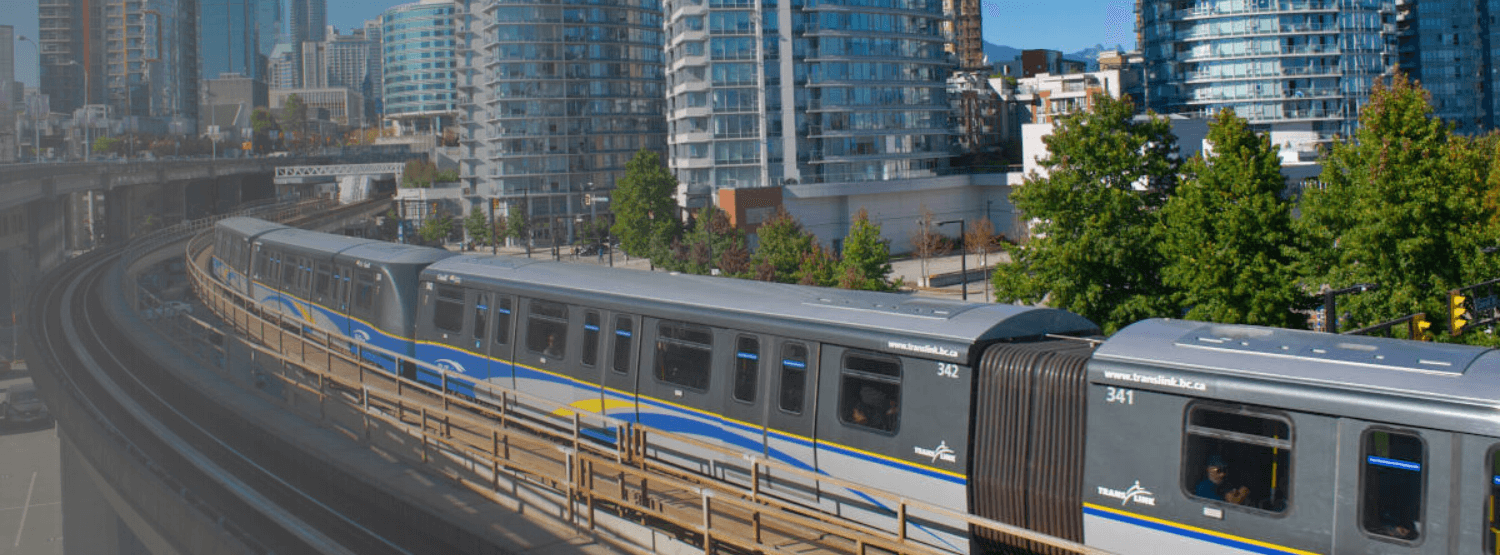
Live Near A Skytrain Or Rapid Transit in Greater Vancouver?
Get your Transit Oriented Development (TOD) or Small-Scale Multi-Unit Housing (SSMUH) Home Valuation Today.
Transit Oriented Development Areas (Bill 47) & Small‑Scale
Multi‑Unit Housing (Bill 44)
Helping homeowners, strata councils, and developers unlock value around rapid transit across British Columbia.
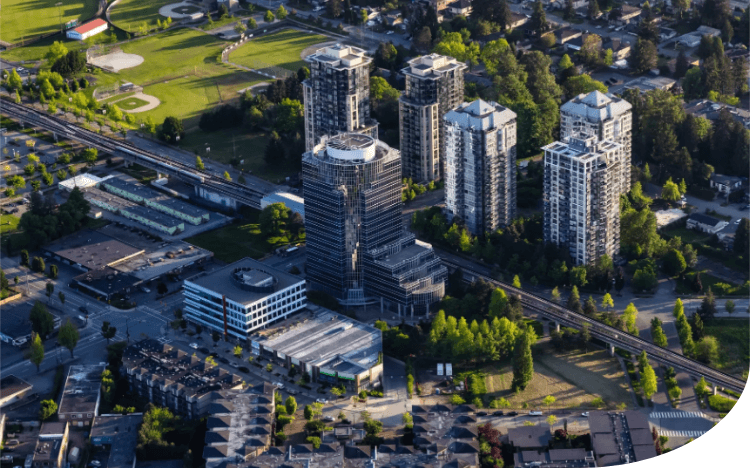
What is a Transit Oriented Development Area (TOD)?
Under Bill 47, TOD’s are mapped areas and organized into tiers (closest to furthest) that determine minimum allowable height and density:
- Tier 1: 0 – 200m from a Skytrain – up to 3.0 FSR or 8 storey’s
- Tier 2: 200 – 400m from a Skytrain – up to 4.0 FSR or 12 storey’s
- Tier 3: 400 – 800m from a Skytrain – up to 5.0 FSR or 20 storey’s
- Bus/Exchange & West Coast Express: up to 400m (with their own tiering)
Local governments must designate these areas by bylaw. Municipalities can exceed provincial minimums, but not go below them. Minimum parking for new housing is eliminated inside TODs (except accessible stalls).
The result is near skytrain stations, buildings can be taller and denser, and they gradually phase down outwards until they meet with single family properties. These projects are also less constrained by on‑site parking minimums, accelerating project viability and delivery timelines for developers.
Let Us Show You What Your Home is Really Worth
Changes To Your Municipality’s
Official Community Plan (OCP)
Bill 47 requires all BC local governments to update their Official Community Plans (OCP’s) by December 31, 2025, to plan for 20 years of housing needs and align with provincial policies.
After the update, OCP’s must be revised every 5 years via Housing Needs Reports that guide these updates and pre-zoning.
What this means for your property? Near transit, TOD minimums and reduced parking can make taller, denser forms feasible. Across low‑density areas, Bill 44 enables multiplex options.
For land assemblies and strata wind‑ups, clearer envelopes and pre‑zoning can translate into more predictable yields and stronger valuations.
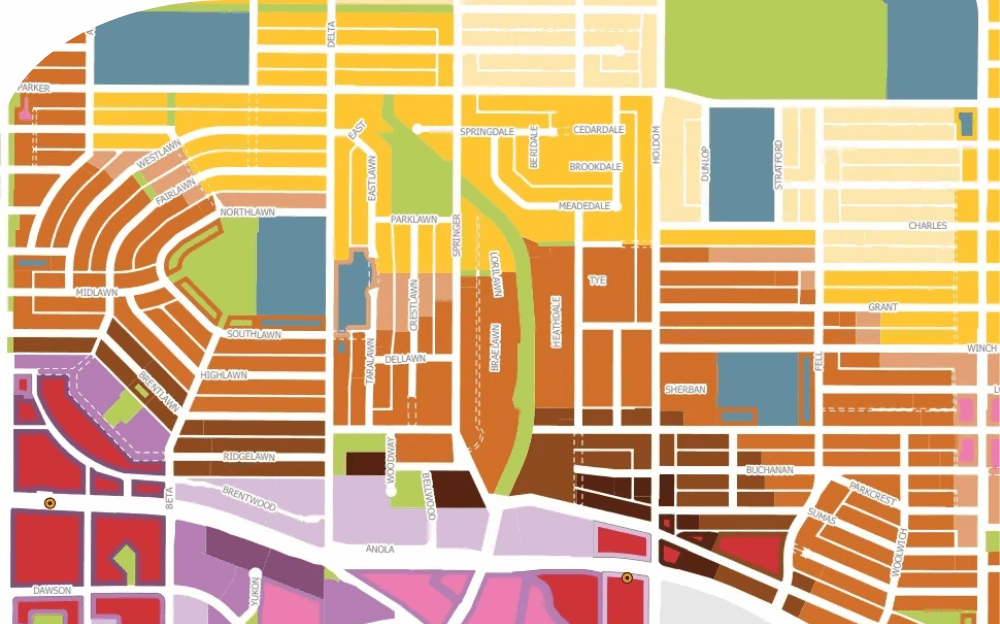

Bill 47 – TOD
Transit Oriented Development (TOD) areas
are defined zones up to 800m from any
Skytrain and 400m from major bus exchanges
and West Coast Express. The Province sets minimum building heights and densities by tier
and removes most parking requirements.

Bill 44 – SSMUH
Small-scale Multi-unit Housing (SSMUH) requires cities to allow multiplex housing (generally 3–4
units per lot province‑wide, with up to 6 units
near the Frequent Transit Network (FTN)), subject to municipal implementation details and local exemptions.

Why This Matters?
If you own property near a Skytrain station or major bus exchange, your land may support more homes, more height, and more density than before, and buyers (including developers) will price that potential into consideration when listing the property.
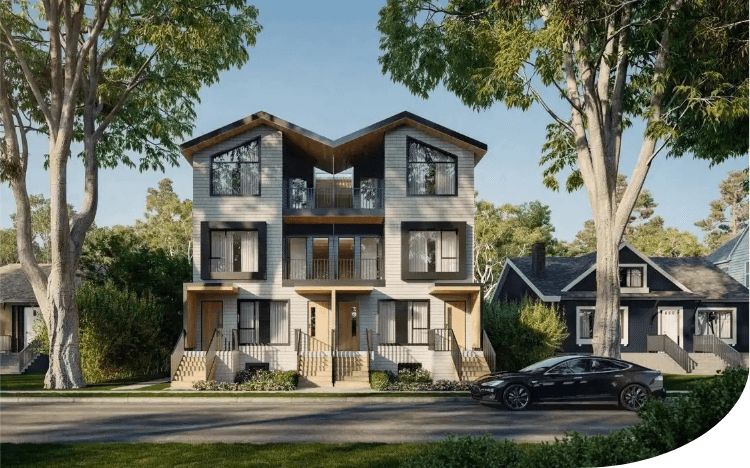
What is a Small-Scaled Multi-Unit Housing (SSMUH)?
Under Bill 44, municipalities require most single‑detached and duplex zones to allow small‑scale multi‑unit housing:
- Parcels ≤ 280 m²: minimum 3 homes
- Parcels > 280 m²: minimum 4 homes
- Near frequent bus service: municipalities should enable up to 6 homes, with local rules defining exact eligibility and form
These allowances work alongside TOD changes. On many streets that were formerly single‑detached, multiplex forms (triplex, four-plex, five-plex and
six-plex) are now permitted, increasing gentle density across established neighbourhoods.
What This Means for You?
Homeowners & Strata Councils (Wind‑ups)
- Higher land values near stations due to larger, taller, denser development potential.
- Simplified parking rules reduce site planning friction and underground parkade costs.
- Aggregation opportunity: Adjacent lots (or whole strata wind‑ups) can assemble into a more valuable development site than the sum of parts.
How Doma Group helps: We organize block‑by‑block land assemblies, coordinate strata wind‑ups, model highest‑and‑best‑use, and market to qualified developers.
Developers & Builders
- Tier‑based envelopes create clarity to underwrite height, FSR, and yield (with possible municipal policy able to go higher).
- Faster paths where rezoning align with provincial minimums and municipal TOD bylaws.
- Parking relief inside TODs supports more efficient massing and construction economics.
How Doma Group helps: We source off‑market sites, negotiate multi‑owner agreements, package due diligence (zoning, title review, services, soils) and guide applications with local planners.
Explore Transit Orientated Development Areas
Find a list of the transit stations below which local governments have designated as TOD Areas. Minimum allowable density and applicable distance from Transit Stations.
Burnaby
Brentwood Town Centre Station (PDF, 2.24MB)
Burquitlam Station (overlaps Coquitlam) (PDF, 2.52MB)
Joyce – Collingwood Station (overlaps Vancouver) (PDF, 3.52MB)
Lougheed Town Centre Station (overlaps Coquitlam) (PDF, 2.25MB)
Metrotown Station (PDF, 2.48MB)
Patterson Station (PDF, 2.38MB)
Chilliwack
Coquitlam
Burquitlam Station (overlaps Burnaby) (PDF, 2.52MB)
Coquitlam Central Station (overlaps Port Coquitlam) (PDF, 2.67MB)
Inlet Centre Station (overlaps Port Moody) (PDF, 2.17MB)
Lafarge Lake – Douglas Station (PDF, 2.6MB)
Lincoln Station (overlaps Port Coquitlam) (PDF, 2.56MB)
Lougheed Town Centre Station (overlaps Burnaby) (PDF, 2.25MB)
Maple Ridge
New Westminster
District of North Vancouver
Port Coquitlam
Port Moody
Richmond
Saanich
Surrey
Vancouver
29th Avenue Station (PDF, 3.24MB)
Bridgeport Station (overlaps Richmond) (PDF, 2.16MB)
Broadway – City Hall Station (PDF, 2.34MB)
Great Northern Way – Emily Carr Station (PDF, 2.44MB)
Joyce – Collingwood Station (overlaps Burnaby) (PDF, 3.52MB)
King Edward Station (PDF, 527KB)
Langara – 49th Avenue Station (PDF, 483KB)
Marine Drive Station (overlaps Richmond) (PDF, 2.3MB)
Mount Pleasant Station (PDF, 2.41MB)
Oak – VGH Station (PDF, 2.39MB)
Oakridge – 41st Avenue Station (PDF, 491KB)
Olympic Village Station (PDF, 2.4MB)
Rupert Station (overlaps Burnaby) (PDF, 2.33MB)
South Granville Station (PDF, 2.39MB)
Stadium – Chinatown Station (PDF, 2.83MB)
Victoria
What Our Client’s Say About Doma Group:
Hugo Vasquez

About
Lanie Pancho
About
Sophie Liu
About
Douglas K
About
Ron Darvin
About
Stay Informed on Vancouver’s Real Estate Market
-

How Much Down Payment Do You Need to Buy a Home in Vancouver?
Read More: How Much Down Payment Do You Need to Buy a Home in Vancouver? -

Top 15 Tips for First Time Home Buyers
Read More: Top 15 Tips for First Time Home Buyers -
First Time Home Buyer Incentives in BC Explained (2025 Guide)
Read More: First Time Home Buyer Incentives in BC Explained (2025 Guide)